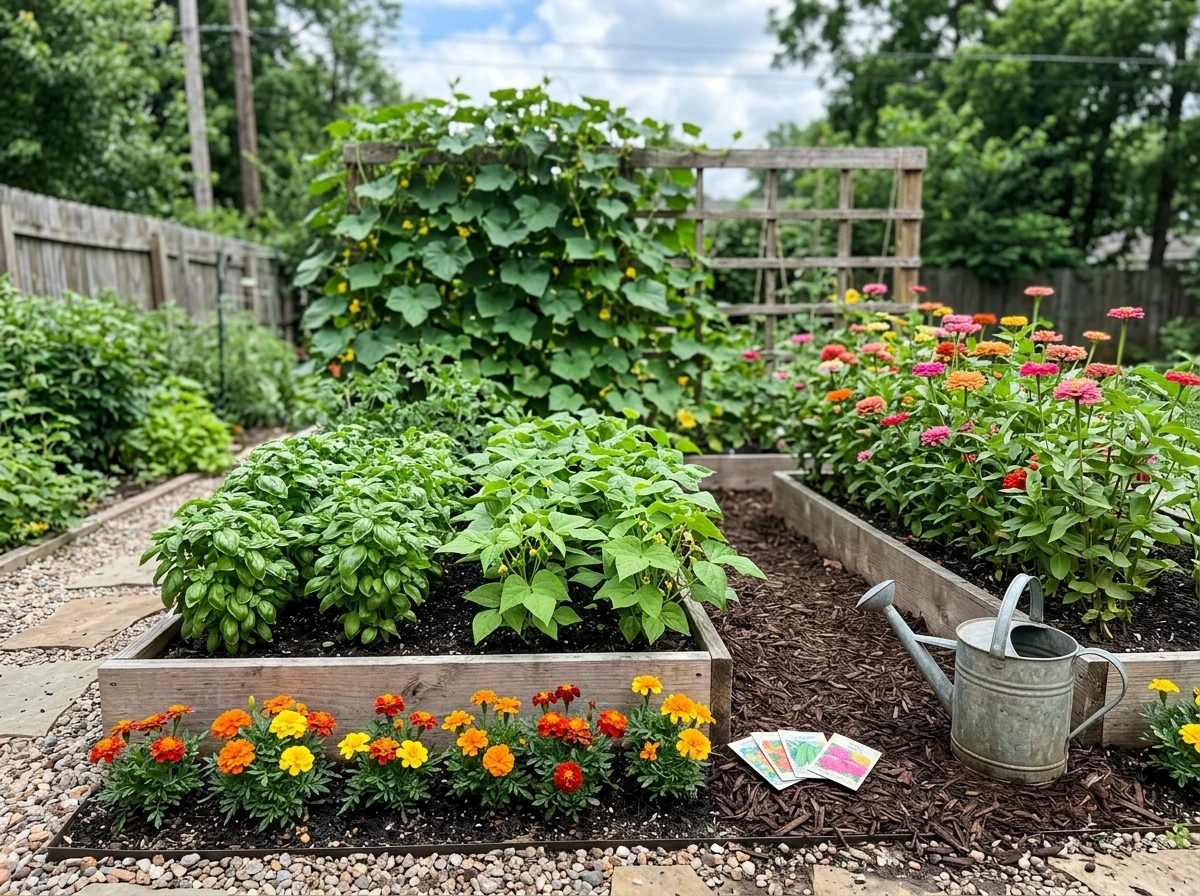
May is one of the best months to sow seeds, but what you should plant depends almost entirely on where you live. A gardener in Georgia can direct-sow tomatoes and basil into warm soil by early May. A gardener in Minnesota might still be nursing seedlings indoors and nervously watching the forecast. So before you grab a packet and start poking holes in the dirt, spend two minutes figuring out your actual conditions, because that single step will save you a lot of failed germination and frost-killed seedlings.
Plants to Grow From Seed in May: What to Sow by Zone
Rachel Hartley
24 Mar 2026
Quick May Rules: Frost Risk, Soil Warmth, and Daylight
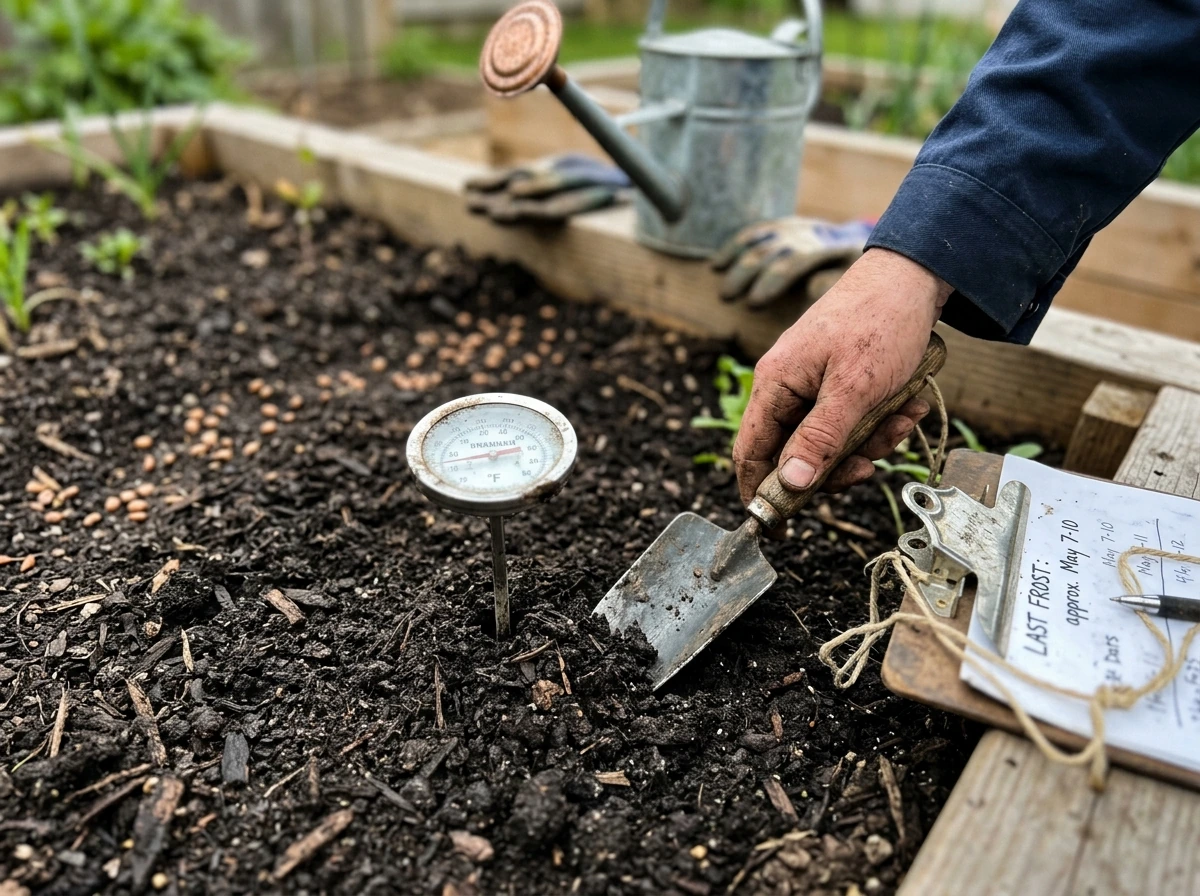
Your last frost date is the most important number in May gardening. If you don't know yours, look it up by zip code before anything else. In most of the US, last frost dates in May fall in zones 5 and 6 (roughly the upper Midwest, mid-Atlantic, and parts of the Mountain West). Zones 7 and warmer are usually frost-free by late April. Zones 3 and 4 (northern Minnesota, Montana highlands, much of Canada) can see frost into late May.
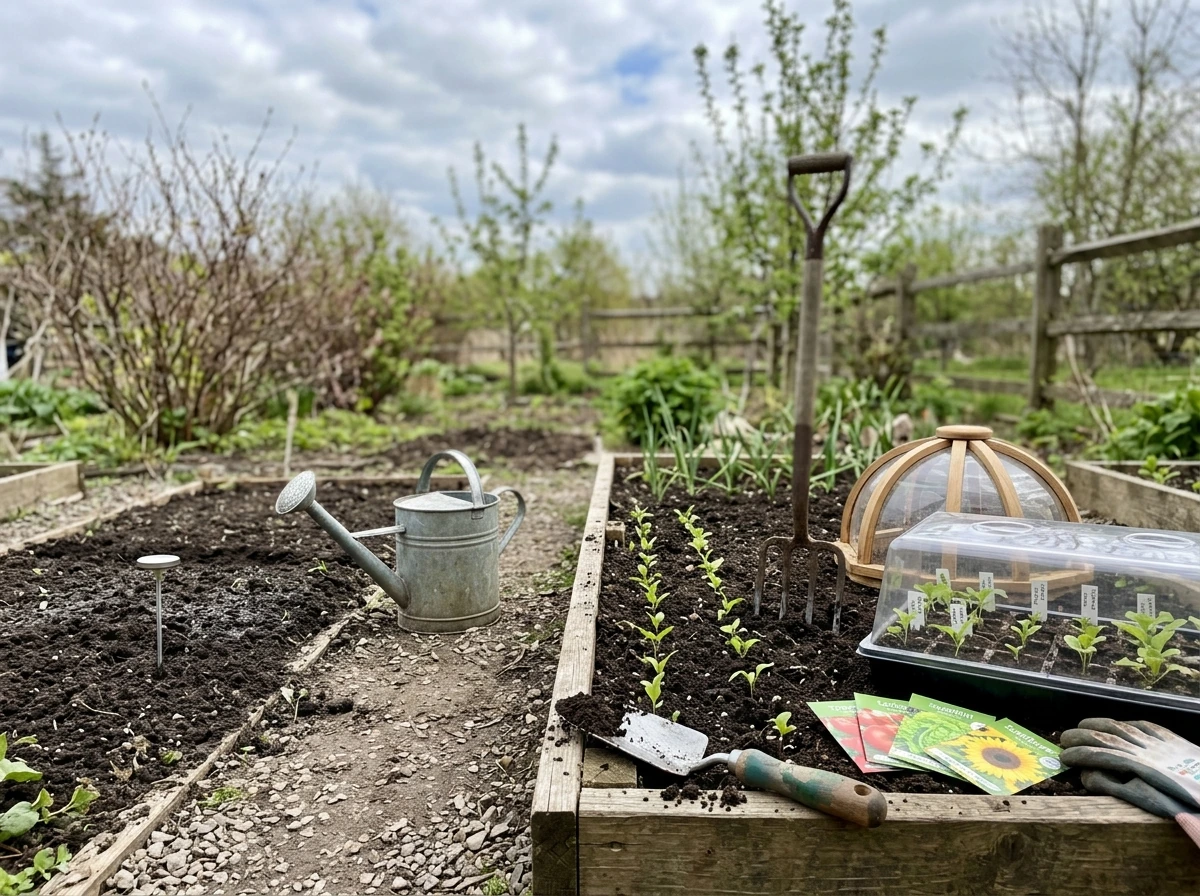
Soil temperature matters just as much as air temperature. Cool-season crops like lettuce and peas can germinate at soil temps as low as 35 to 40°F, which means you can often direct-sow them in early May almost anywhere. Warm-season crops like beans, squash, and basil want soil at 60°F or above to germinate reliably. Stick a cheap soil thermometer 2 to 3 inches into the ground in the morning for an accurate reading. Don't guess.
Daylight in May is long and getting longer, which is genuinely helpful. Most seeds and seedlings thrive with 14 to 16 hours of light when started indoors under grow lights, and outdoor days in May easily hit that in the northern hemisphere. If you're starting seeds on a windowsill, south-facing is the only direction worth trying without supplemental light. May light intensity is strong enough to cause sunscald on pampered indoor seedlings moved outside too fast, so plan for hardening off (more on that later).
Best Vegetables to Start from Seed in May
Here's how I think about May vegetables: cool-season crops go in the ground directly, warm-season crops depend on whether your nights are still cold. If you're past your last frost and soil is warm, you can direct-sow warm-season crops too. If you're borderline, start them indoors and transplant in 3 to 4 weeks.
Direct Sow Now (Cool-Season and Fast Crops)
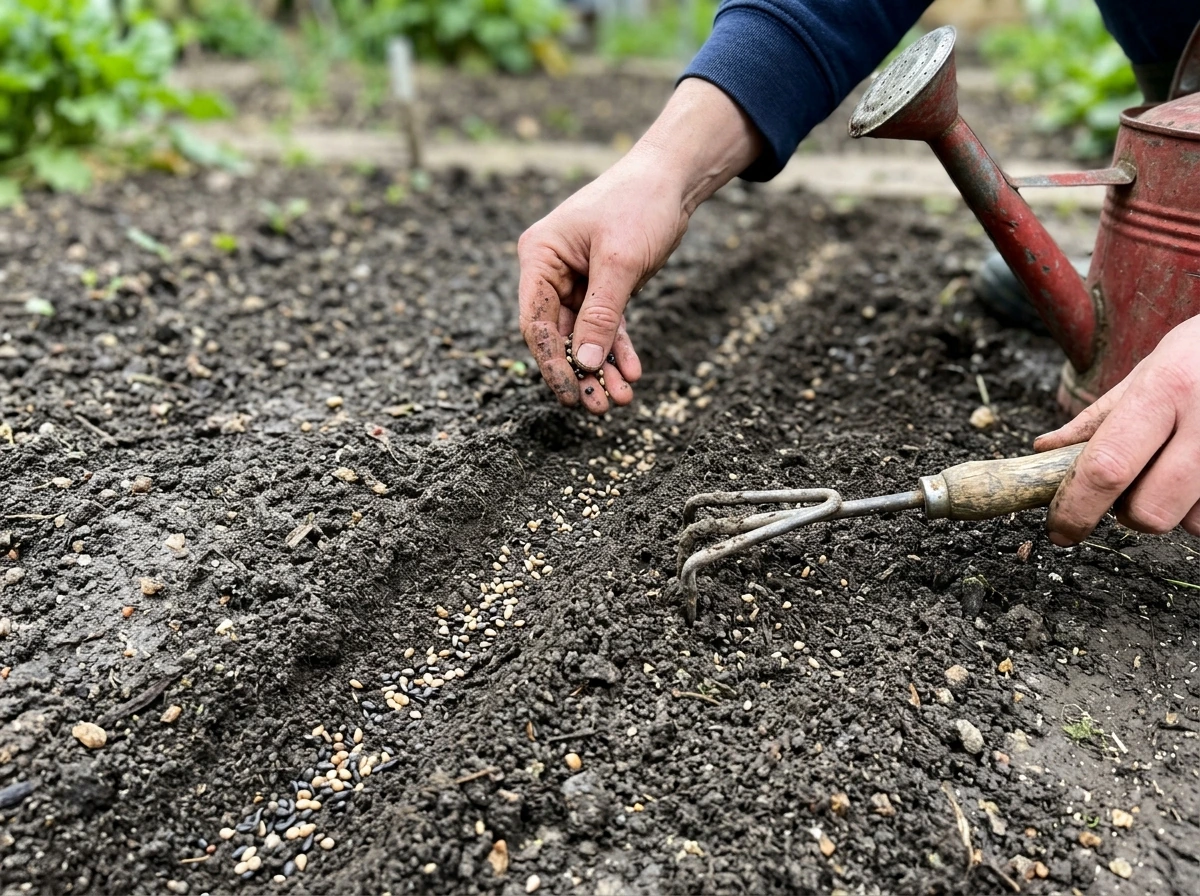
- Lettuce and salad greens: Germinates at soil temps as low as 35°F. Sow 1/4 inch deep, thin to 6 to 8 inches. Harvest in 45 to 60 days. Bolt risk increases as summer heat arrives, so plant now and don't wait.
- Peas (English, snap, snow): Minimum soil temp around 40°F. Sow 1 inch deep, 2 inches apart. They hate heat, so in warm zones, May might actually be your last chance before the window closes.
- Carrots: Need at least 40 to 50°F soil. Sow 1/4 inch deep, thin aggressively to 2 to 3 inches once established. Don't transplant, carrots must be direct-sown.
- Radishes: One of the fastest seeds you can grow, ready in 25 to 30 days. Sow 1/2 inch deep, thin to 2 inches. Great for filling gaps between slower crops.
- Beets: Sow 1/2 inch deep, thin to 3 to 4 inches. Tolerates cool soil and light frost. A reliable May crop almost everywhere.
- Spinach and Swiss chard: Both germinate in cool soil. Spinach bolts fast in heat, so prioritize it early in May. Chard is more heat-tolerant and will carry you into summer.
- Kale: Cool-season workhorse. Sow 1/4 to 1/2 inch deep, thin to 12 inches. Frost actually improves the flavor.
Warm-Season Vegetables (Direct Sow if Frost-Free and Soil is Warm)
- Beans (bush and pole): Don't bother transplanting, they hate root disturbance. Sow 1 inch deep, 4 to 6 inches apart after last frost. Germination is fast at 60°F+ soil.
- Squash (summer and winter): Direct sow 1 inch deep in groups of 2 to 3 seeds, thin to the strongest plant. They grow fast once they're going.
- Cucumber: Soil needs to be at least 60°F. Sow 1/2 inch deep. In cooler zones, start indoors 3 weeks before transplanting.
- Corn: Needs warm soil and space. Sow in blocks (not single rows) for pollination. 1 inch deep, 9 to 12 inches apart.
- Zucchini: Fastest return of any warm-season vegetable. Direct sow after last frost, expect harvest in 50 to 60 days.
If you're in zone 5 or 6 and it's early May with cold nights still in the forecast, start warm-season vegetables like tomatoes, peppers, and eggplant indoors if you haven't already. They need 6 to 8 weeks before transplanting, so mid-May indoor starts will be ready for late June planting, which still gives you a reasonable harvest window.
Best Flowers to Start from Seed in May
Flowers from seed in May fall into two camps: fast annuals you can direct-sow and expect to bloom by midsummer, and perennials that won't flower this year but are still worth starting now. Both are worth doing.
Fast Annuals to Direct Sow
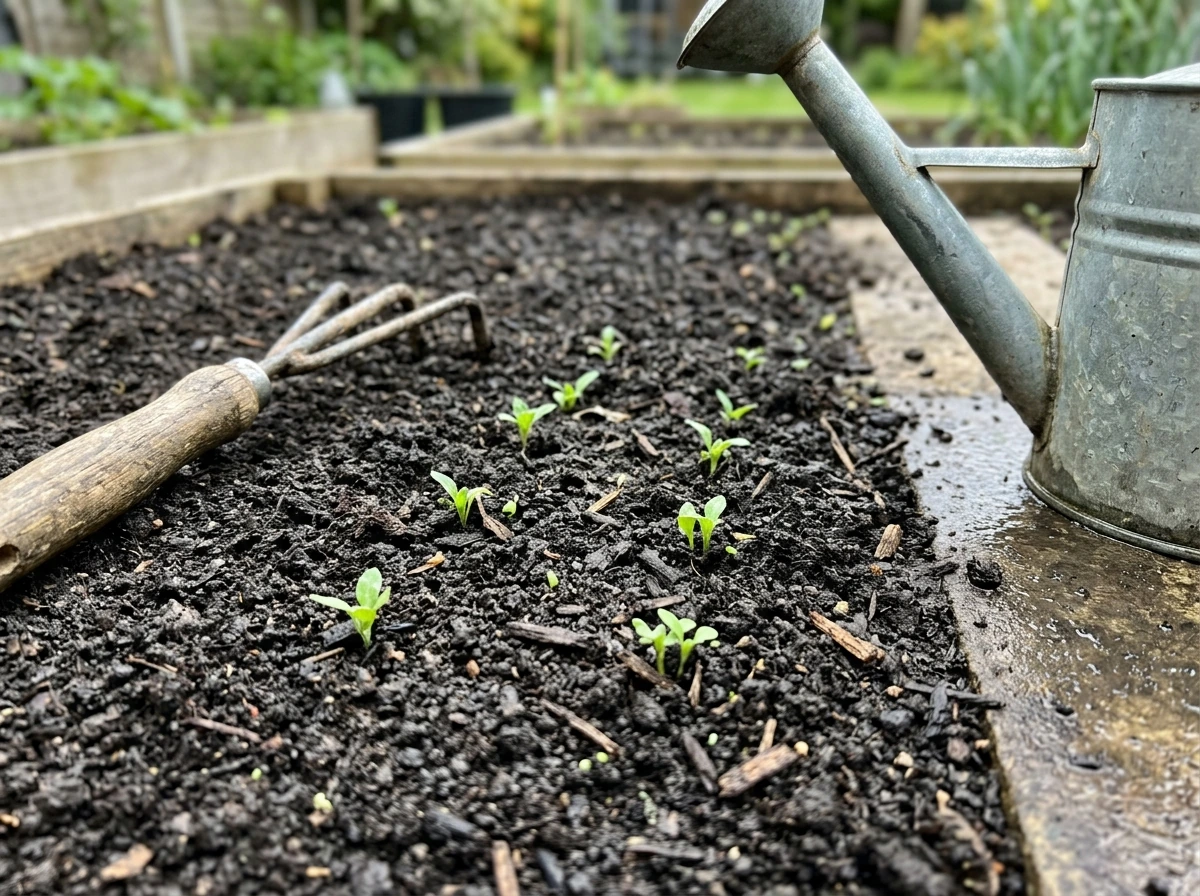
- Calendula: One of the easiest and most rewarding. Blooms in around 60 days from seed, tolerates cool temps, and direct-sows beautifully in May. Sow 1/4 inch deep.
- Nasturtium: Direct sow after last frost, 1/2 inch deep. Blooms in 50 to 60 days. Edible flowers and leaves are a bonus. Heat-tolerant once established.
- Zinnia: One of the best direct-sow summer annuals. Wait until soil is warm (at least 60°F), sow 1/4 inch deep, thin to 6 to 12 inches. Blooms in 60 to 70 days and keeps going until frost.
- Sunflowers: Direct sow 1 inch deep after last frost. Most varieties bloom in 70 to 90 days. Plant in succession every 2 weeks for continuous blooms.
- Cosmos: Incredibly easy, fast, and prolific. Sow thinly on the soil surface (needs light to germinate), thin to 12 inches. Blooms in about 60 days.
- Marigolds: Classic companion plant and pollinator magnet. Sow 1/4 inch deep. Start indoors 4 to 6 weeks before last frost or direct sow after.
- Bachelor's button (Cornflower): Cool-season annual that tolerates light frost. Direct sow in early May. Blooms in 60 to 70 days.
Perennials Worth Starting in May
Most perennials from seed won't bloom until their second year, but starting them in May means they have the whole growing season to establish roots before winter. That's a good trade. A few worth doing: black-eyed Susan (Rudbeckia), coneflower (Echinacea), and columbine. One catch with Echinacea: it naturally needs cold moist stratification at around 40°F for 2 to 3 weeks to break dormancy. If you're sowing fresh seed collected from your own plants, you may be able to skip stratification, but with store-bought seed, either stratify it in the fridge first or direct-sow outdoors in May and let natural temperature swings do the work. Start perennials in trays indoors if you want more control, then transplant to their permanent spot by late summer.
Herbs and Pollinator Plants from Seed in May
May is a great month for kitchen herbs, especially if you've been buying bundles at the grocery store all winter. Here's the split: some herbs are easy to direct-sow, others really want to be started indoors first.
Herbs to Direct Sow in May
- Dill: Sow directly where it will grow, it doesn't like transplanting. 1/4 inch deep. Ready to harvest in 40 to 60 days. Self-seeds freely if you let it flower.
- Cilantro: Same deal, direct sow only. Bolts quickly in heat, so plant now in cooler zones. Sow every 2 to 3 weeks for continuous harvest.
- Fennel: Direct sow 1/4 inch deep after last frost. Slow to establish but worth the wait.
- Chamomile (German): Scatter seeds on the soil surface, press in but don't cover. Germinates in light. Blooms in 60 to 90 days and self-seeds prolifically.
- Borage: Excellent pollinator plant with edible flowers. Direct sow 1/4 inch deep after last frost. Bees absolutely love it.
Herbs to Start Indoors (or Buy as Transplants)
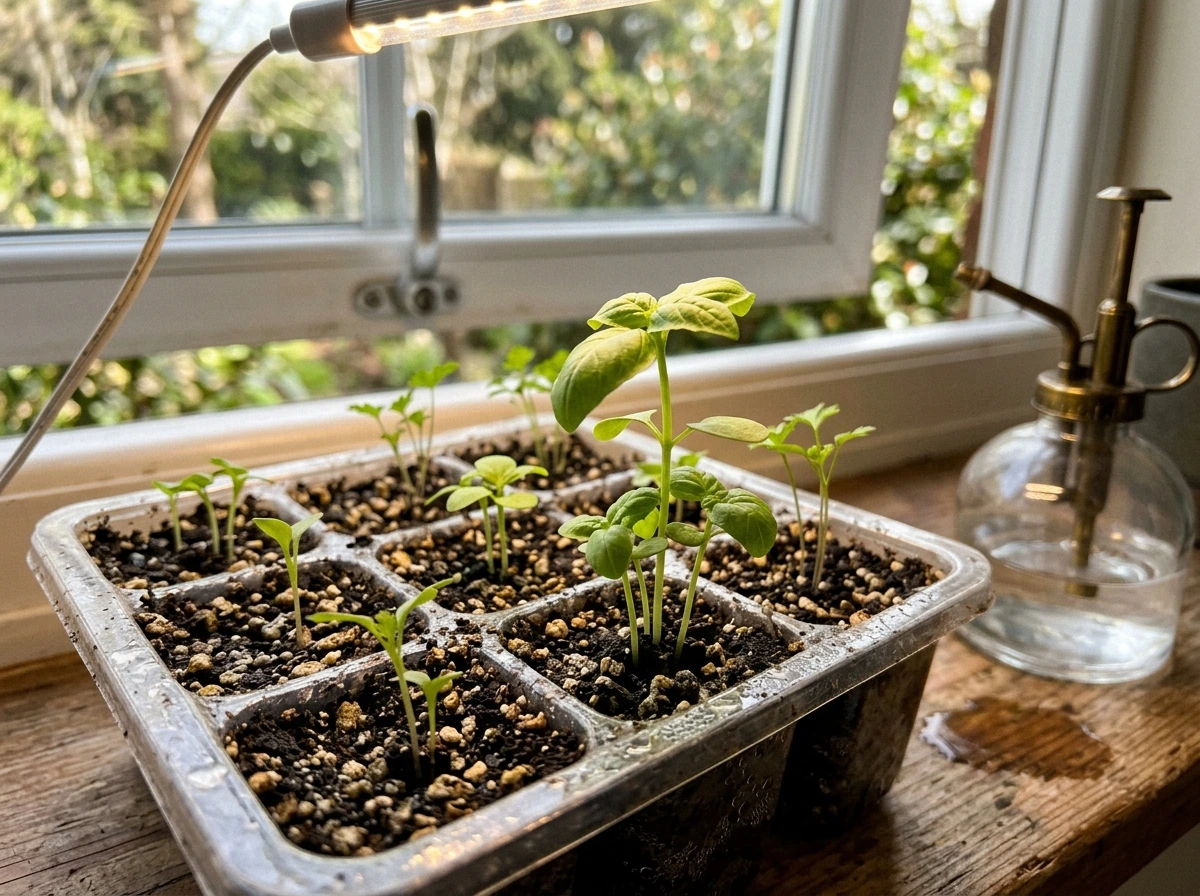
- Basil: Wants warm soil (65°F minimum). Start indoors 4 to 6 weeks before last frost, or direct-sow once nights stay above 50°F consistently. Cold soil kills germination.
- Parsley: Slow to germinate (up to 3 weeks). Start indoors for better results or direct-sow with patience. Soak seeds overnight to speed germination.
- Oregano and thyme: Very slow from seed. In May, it's honestly faster to buy transplants or take cuttings from established plants. If you do start from seed, do it indoors.
Pollinator Plants to Sow in May
- Phacelia: One of the top bee plants. Fast-growing annual, direct sow in May. Blooms in 6 to 8 weeks.
- Sweet alyssum: Direct sow on soil surface, needs light to germinate. Blooms in 45 to 60 days and attracts beneficial insects as much as bees.
- Echinacea (coneflower): Already covered under perennials, but worth repeating here. Native bees and butterflies love it.
- Lemon balm: Start indoors or direct sow. Extremely easy and vigorous. Bees are drawn to the flowers and it spreads readily, so give it defined borders.
- Anise hyssop: Direct sow or start indoors. Blooms first year if started early enough. Bees and hummingbirds visit constantly.
Trees, Shrubs, and Long-Season Starts for May
Most people don't think of May as a time to start trees from seed, but it actually is a reasonable window for several species, especially if you understand what you're getting into. These are multi-year investments. You're not getting fruit this summer. But starting now gives them the longest possible first growing season.
- Native oaks from acorns: Stratify acorns in moist peat in the fridge over winter, then pot up in May. Grow in deep containers (taproots are long) and transplant in fall or the following spring.
- Elderberry (Sambucus): Start cuttings or seeds in May. Seeds need cold stratification, so it's easier to take softwood cuttings from an established plant in spring. Root in a moist growing medium, pot up, and plant out in fall.
- Serviceberry (Amelanchier): Direct sow seeds outdoors in May after cold stratification. These are slow but extremely rewarding native shrubs for birds and pollinators.
- Butterfly bush (Buddleia): Start seeds indoors in May under lights. Surface sow (seeds need light to germinate), keep warm. Transplant outdoors once nights are warm. First-year plants may bloom late in summer.
- Rosemary: Very slow from seed (up to 3 weeks germination, then months of slow growth). Start indoors in May in a warm spot. Realistically, you'll have a transplant-ready seedling by fall. If you want rosemary this season, buy a plant.
- Lavender: Similar to rosemary, patience required. Start indoors in a warm propagation setup. Germination takes 2 to 4 weeks. Worth doing if you want to grow a lot of it cheaply.
For trees and shrubs, container growing for the first year or two is almost always the better approach. It lets you protect them over winter and move them before committing to a permanent location.
Sowing and Care Tips That Actually Matter
Indoor Seed Starting in May
Use a proper seed-starting mix, not garden soil or potting mix. Seed-starting mix is lightweight, porous, and sterile, which prevents damping off (the fungal rot that kills seedlings overnight). Fill trays, moisten the mix before sowing, then plant seeds at the right depth. Most small seeds go 1/4 to 1/2 inch deep. Firming the soil gently after sowing helps ensure good seed-to-soil contact, which speeds germination. Cover trays with a humidity dome or plastic wrap until sprouts appear, then remove it to prevent mold. Water lightly when the surface dries out but don't let trays sit in standing water.
Thinning: The Step Most People Skip
Thinning is non-negotiable. Crowded seedlings compete for light and nutrients, and the whole group performs worse than a few well-spaced plants would. Use scissors to snip extras at soil level rather than pulling, which disturbs roots. Thin in stages: once when seedlings emerge, again when they're 2 to 3 inches tall. It feels wasteful but it isn't.
Hardening Off: Don't Skip This Either
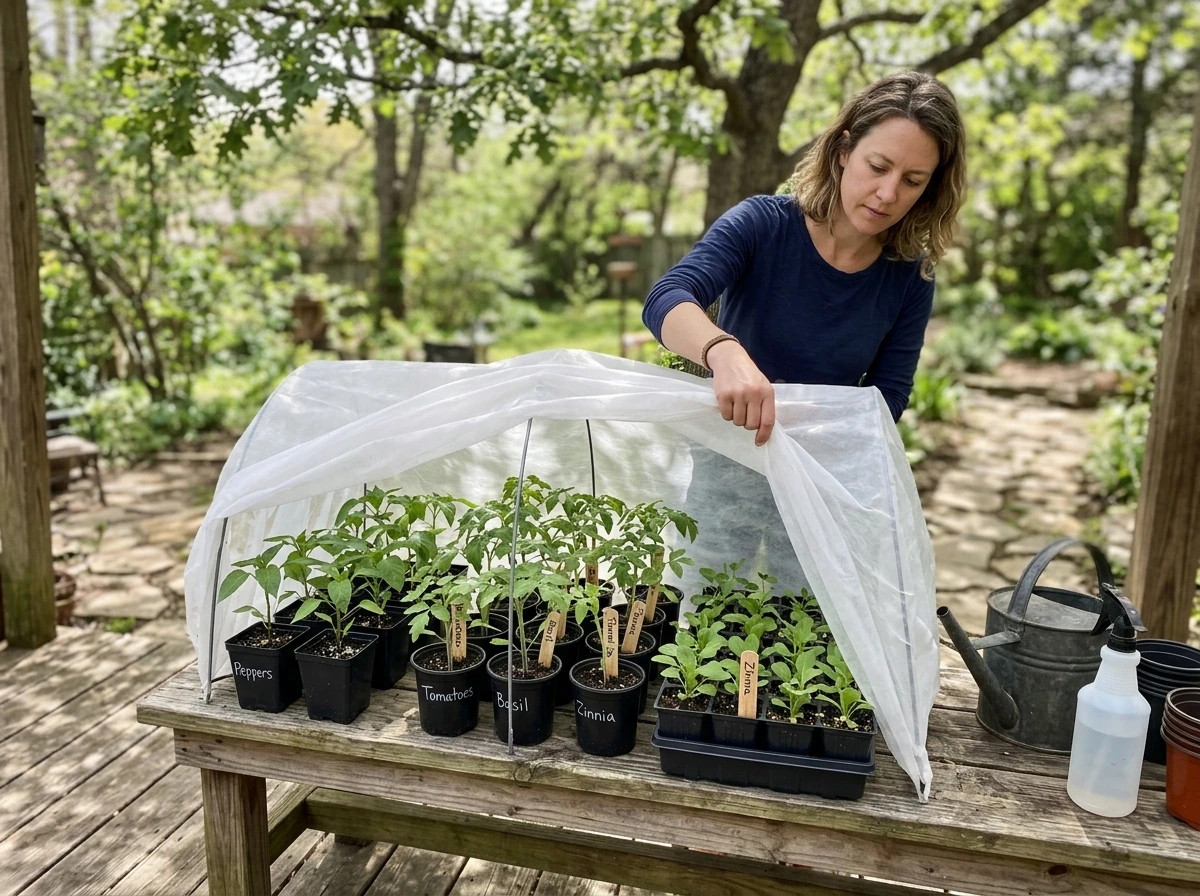
If you've been growing seedlings indoors, they need 7 to 10 days of gradual outdoor exposure before transplanting. Start them on a calm, cloudy day in a sheltered spot for just 1 to 2 hours. Increase outdoor time each day, moving them into more direct sun and wind progressively. Don't put tender seedlings outside on windy days or when temperatures drop below 45°F. Reduce watering frequency slightly during hardening off to toughen the plants, but don't let them wilt. By day 7 to 10, they should be able to handle a full day outside. Then transplant.
Container Growing in May
Containers dry out fast in May sun, especially smaller pots. Check moisture daily rather than watering on a schedule. The finger test (push your finger 1 inch into the soil) is more reliable than looking at the surface. Containers heat up faster than the ground, which is an advantage for warm-season crops but a problem for lettuce and spinach that will bolt early. Use light-colored containers for cool-season crops to reflect heat, and darker ones for heat-lovers like basil and peppers. Drainage holes are mandatory. If you're starting seeds in containers outdoors, make sure nights are consistently above 50°F before sowing warm-season crops.
Expected Timing at a Glance
| Plant | Sowing Method | Germination | Days to Harvest/Bloom |
|---|---|---|---|
| Lettuce | Direct sow outdoors | 5–10 days | 45–60 days |
| Radish | Direct sow outdoors | 3–7 days | 25–30 days |
| Beans (bush) | Direct sow outdoors | 7–14 days | 50–60 days |
| Zinnia | Direct sow outdoors | 5–10 days | 60–70 days |
| Calendula | Direct sow outdoors | 7–14 days | ~60 days |
| Cosmos | Direct sow outdoors | 7–10 days | ~60 days |
| Basil | Start indoors or direct sow (warm soil) | 5–10 days | 60–90 days |
| Dill | Direct sow outdoors | 7–14 days | 40–60 days |
| Echinacea (perennial) | Indoors or stratified direct sow | 10–21 days | Blooms year 2 |
| Lavender | Start indoors | 14–28 days | Blooms year 2+ |
How to Choose Plants for Your Exact Region
Your USDA hardiness zone tells you about winter cold, which is useful for perennials and trees but not the whole picture for May sowing. What you really need is your last frost date and your average May soil temperature. Here's a rough regional guide to calibrate your choices.
| Region / Zone | May Frost Risk | Soil Temp in May | What to Do in May |
|---|---|---|---|
| Zone 3–4 (Northern MN, MT highlands) | Frost possible into late May | 40–50°F early May | Sow cool-season crops only; start warm-season indoors until late May |
| Zone 5–6 (Upper Midwest, mid-Atlantic, PNW) | Last frost mid-April to mid-May | 50–60°F by mid-May | Direct sow cool-season crops; transplant warm-season after frost date |
| Zone 7 (VA, TN, Pacific coast, PNW lowlands) | Frost-free by late April | 60°F+ by May | Direct sow warm-season crops; start second cool-season round for fall |
| Zone 8–9 (TX, GA, CA valleys, Pacific NW coast) | No frost risk | 65–75°F | Full warm-season sowing; plant heat-tolerant varieties; shade lettuce |
| Zone 10–11 (South FL, HI, Southern CA deserts) | No frost; summer heat is the limiting factor | 75°F+ | Focus on heat-adapted crops; cool-season window closing fast |
Day length also matters for certain crops. Onions and some lettuce varieties are day-length sensitive. In northern zones (zone 5 and above), May's long days favor bulbing onions and bolting in some spinach varieties. If you're growing onions from seed, choose long-day varieties in the north and short-day varieties in the south.
If you're using season extension tools like row cover, plastic mulch, or cold frames, you can push If you're using season extension tools like row cover, plastic mulch, or cold frames, you can push warm-season crops 2 to 3 weeks earlier than your bare-ground frost date suggests. This is especially useful in zones 5 and 6, where May soil warms slowly. Monitor soil temperature under the mulch rather than relying on air temperature, as these can differ by 5 to 10°F.
One final thing worth saying: May is forgiving. Seeds are cheap and the days are long. If something fails to germinate or gets nipped by a late frost, you usually have time to resow. The gardeners who do best in May are the ones who sow a little more than they need, thin ruthlessly, and don't agonize over perfection. Start with what you actually want to eat or look at, use your frost date and soil temp to guide the timing, and adjust from there. Start with what you actually want to eat or look at, use your frost date and soil temp to guide the timing, and adjust from there. If you want to think ahead to what comes after May's cool-season crops wind down, summer planting and midsummer successions are their own puzzle worth planning for now. ...what you actually want to eat or look at, use your frost date and soil temp to guide the timing, and adjust from there. Start with what you actually want to eat or look at, use your frost date and soil temp to guide the timing, and adjust from there. If you want to think ahead to what comes after May's cool-season crops wind down, summer planting and midsummer successions are their own puzzle worth planning for now. what plants to grow in summer. best plants to grow in late summer. best plants to grow in late summer.
FAQ
My last frost date passed, but it still feels cold. Can I sow warm-season seeds in May anyway?
For May, the goal is not just warm air, it is consistently warm soil. If your nights are still cold or forecast lows drop near 45°F, wait to direct-sow warm-season crops until your soil thermometer stays around 60°F+ by morning most days. If you are already late, start indoors and transplant once nights stabilize, rather than trying to “speed it up” with extra watering or shade cloth alone.
What should I do if seeds do not germinate after I sow them in May?
Do a quick germination check instead of assuming the seed is dead. Keep a record of sowing date, depth, and soil temperature, then look for a few seeds in a small test spot or gently inspect one seedbed corner after the expected germination window. If nothing appears, improve the two biggest variables next time for similar seeds, soil temperature and sowing depth, then resow promptly because May usually gives you a second chance.
How long should I keep a humidity dome or plastic wrap on seed trays?
Remove the humidity dome or plastic wrap as soon as you see sprouts, because trapped moisture and stagnant air invite mold. After removal, aim to keep the surface lightly moist, not wet, and improve airflow (even just moving the tray to a brighter spot with gentle circulation). If you see fuzzy growth on the mix, let the surface dry slightly before watering again.
I pressed the soil too hard after sowing. Will that ruin germination?
Most crop seeds need firm soil contact, but you can overdo it and make it hard for roots to expand. Firm only gently after sowing, then water in a way that does not float seeds (a light mist or bottom-watering for trays). If you notice seeds are washing to the surface, switch to a finer spray and cover again only if the seeds were exposed.
My seedlings look stressed after hardening off. Should I restart the process?
Hardening off is partly about temperature, but it is also about wind and sun exposure. If leaves look pale, curled, or droopy after a day outside, scale back to shade and lower wind for 1 to 2 days, then resume gradually. Do not harden off on the first day of heat spikes, use a calm window (or start with 30 to 60 minutes) and build up.
Can I direct-sow seeds in containers outdoors in May, or should I always start indoors?
Yes, May direct-sowing can work well in containers, but moisture swings are bigger than in-ground. Check moisture daily using the finger test, especially for small pots, and water in the morning so leaves dry before evening. Use containers with drainage holes and consider a slightly larger pot size for cool-season crops to slow down drying and reduce bolt triggers.
Which kitchen herbs are most reliable to start from seed in May?
Some herbs are slow to establish from seed and can be frustrating in May heat, especially if the bed dries out quickly. If you want reliable success, start basil, cilantro, or dill in a spot with consistent moisture (and expect to thin). For chives and some mint-family herbs, seed can be more forgiving, but for best results choose fresh seed and do not let the seedbed dry.
Do day length issues matter for all seeds, or only certain crops?
Day length mainly affects onions and some lettuce types by pushing them toward bolting or bulbing. If you do not know your variety type, look for “long-day” or “short-day” on the seed packet and match it to your location. In the north, long days in May can favor bulbing onions, while some spinach choices may bolt sooner.
I tried growing onions from seed in May and they bolted. What went wrong?
For onion seedlings, bolting and poor bulbs are often timing and spacing issues combined. Choose the correct day-length variety for your latitude, keep seedlings evenly watered, and avoid letting them dry out during bulbing formation. When transplanting, handle gently and space as directed because overcrowding can limit bulb development.
Do season extension tools let me sow warm-season crops earlier, or is it just hype?
Yes, but use them strategically. If you cover too early without checking soil temperature, you can warm the air while the ground stays cool. Use row cover or plastic mulch to raise soil temps, then still confirm with a soil thermometer, especially in zones where May warms slowly. Keep an eye on venting once plants start growing fast.
Can I still plant more after my May cool-season crops start to wind down?
If you miss the window for cold-season crops because of frost or crowding, do not assume the season is over. Many gardeners switch to succession planting, sowing smaller batches every 2 to 3 weeks while temperatures are still manageable. Re-check your bolt risk for lettuce and spinach before committing, and pick varieties labeled for heat tolerance if late May is warm where you live.
Next Article
Best Plants to Grow in June: What to Plant Now by Zone
Zone by zone guide to the best plants to grow in June, with seed vs transplant tips and container options.